Protecting Your Equity: Why Every Small Business Needs a Brand Style Guide
You have likely spent significant resources developing your business’s visual identity. You commissioned a logo, chose a color palette, and launched a website. At that moment, your brand looked polished, cohesive, and professional.
Fast forward twelve months. You look at a flyer produced by a junior staff member, and the logo is slightly stretched. You visit your social media channels, and the tone of voice sounds nothing like the professional copy on your website. You hire a local vendor to wrap a company vehicle, and the shade of blue they used is three shades lighter than your business cards.
This fragmentation is not just an aesthetic annoyance; it is a financial leak. Every time your brand appears inconsistent, you dilute the market recognition you paid to build.
The solution to this entropy is not "better design" or "more meetings." It is a foundational governance document known as a Brand Style Guide. Understanding brand style guide importance is the difference between owning a logo and owning a scalable, valuable brand asset. This article outlines why this document is a non-negotiable tool for growing businesses and how to use it to protect your equity.

The Difference Between a Logo and a System
Many business owners confuse a logo with a brand. A logo is a single asset; a brand is a system of recurring associations. The value of a brand lies in its consistency. When a customer sees your signage, visits your website, or reads your proposal, they should experience an immediate, subconscious recognition that connects those touchpoints.
Without a style guide, you are relying on memory and individual interpretation to maintain that connection. If you ask three different designers to "make it pop" or "use our blue," you will get three different results.
A Brand Style Guide (often called a Brand Bible or Identity System) is the rulebook that removes interpretation from the equation. It defines exactly how your visual and verbal assets must be used. It transforms your brand from an abstract concept into a replicable system that can be executed by anyone—staff, freelancers, or agencies—without a drop in quality.
Reducing Operational Friction and Vendor Costs
One of the most practical arguments for brand style guide importance is simple efficiency. Consider the workflow involved in creating a new marketing asset, such as a brochure or a digital ad campaign.
Without a style guide, every new project starts from zero. You spend hours briefing a designer, explaining your preferences, correcting font choices, and debating color combinations. You might go through four or five rounds of revisions just to get the "vibe" right. This is an expensive use of your time and your budget.
With a style guide, you hand the document to a vendor alongside the project brief. The guide answers 90% of their questions before they ask them. They know exactly which fonts are allowed for headlines, which hex codes to use for backgrounds, and how much "clear space" must surround the logo.
This clarity drastically reduces revision cycles. It allows you to utilize professional graphic design services more effectively, as the designers can skip the "discovery" phase of the visual language and move straight to execution. You stop paying for experimentation and start paying for output.

Protecting Brand Equity During Growth
As a business scales, the founder is no longer the sole guardian of the brand. You hire marketing coordinators, sales directors, and administrative staff who all create external-facing documents. You might open a second location or expand into a new territory.
This is the danger zone for brand consistency. In the rush of expansion, standards often slip. A sales rep creates a PowerPoint presentation using a generic template. A store manager prints a sale sign using Comic Sans. Slowly, the premium perception you built begins to erode.
A style guide acts as an insurance policy for your equity. It serves as the "bad cop" so you don't have to. Instead of personally critiquing every font choice, you simply refer the team to the guide. It establishes a standard of professional excellence that is independent of any specific employee.
This is particularly critical when engaging award-winning logo design services for a rebrand or a refresh. The investment you make in that high-level design work is wasted if there is no mechanism to enforce it six months down the line. The guide protects the investment.
The Core Components of a Strategic Style Guide
A functional style guide is not a coffee table book; it is a technical manual. While every organization is different, a comprehensive guide typically includes the following sections.
1. The Logo Usage Rules
This section goes beyond showing the logo. It defines the "Do Nots." It explicitly illustrates that the logo should never be stretched, recolored, rotated, or placed on a cluttered background. It defines the minimum size for print and digital to ensure legibility.
2. The Color Palette
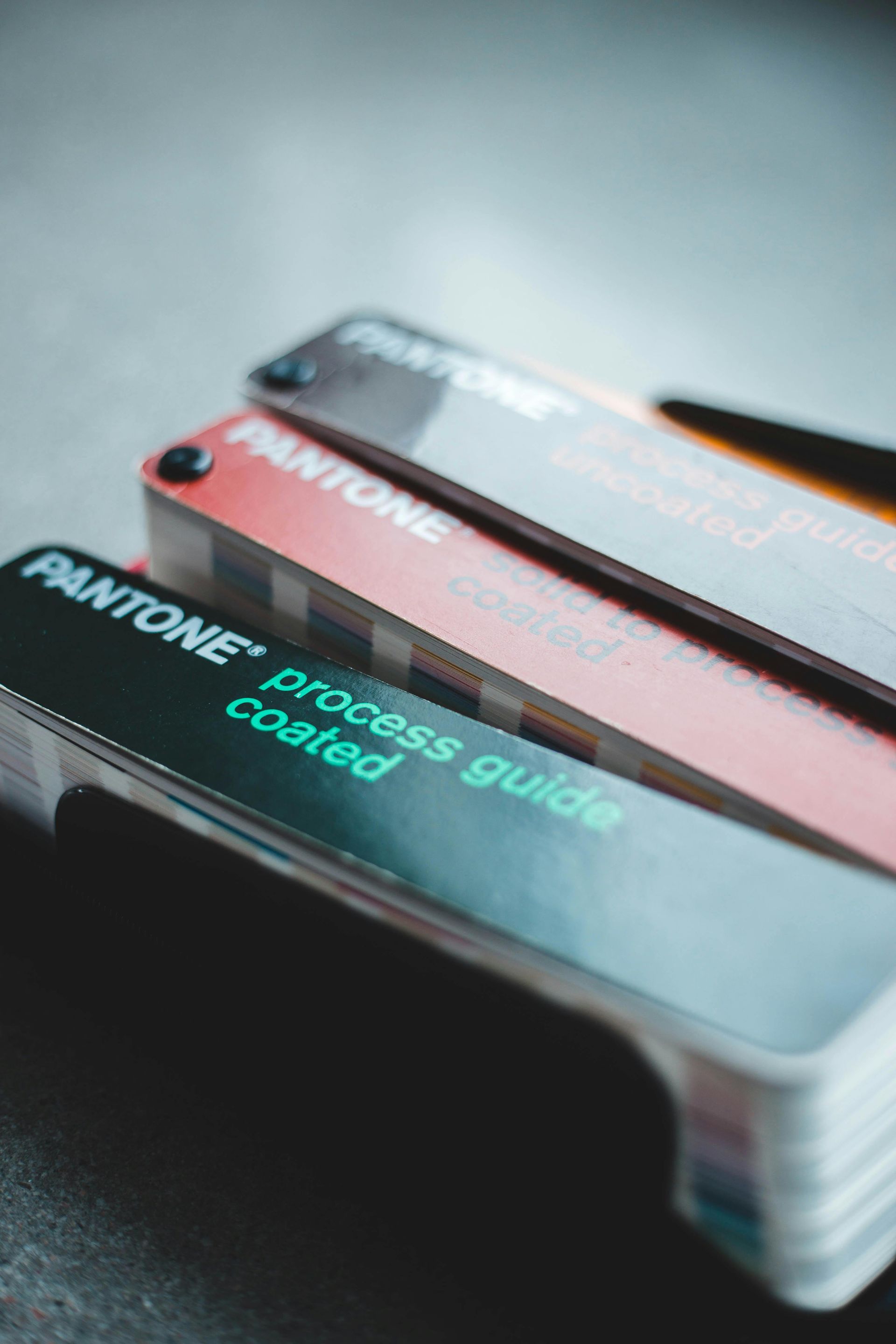
"Dark Blue" is not a color; "Pantone 289 C" is a color. Your guide must define your primary and secondary palettes in all relevant color modes:
• CMYK for professional printing.
• RGB for screens and monitors.
• HEX for web design and coding.
• PMS (Pantone) for offset printing and merchandise.
3. Typography Hierarchy
Typography is the voice of your brand in print. The guide should specify which typeface is used for headlines, which is used for body copy, and—crucially—which system fonts (like Arial or Calibri) are acceptable substitutes in internal documents like Word or PowerPoint when the primary brand font is unavailable.
4. Photography and Imagery Style
Does your brand use stark, black-and-white photography? Do you use warm, candid shots of people? Do you use flat illustrations? Defining the imagery style ensures that a stock photo purchased by a junior associate doesn't clash with the custom photography on your homepage.
5. Voice and Tone
Consistency is not just visual. The way you speak matters. A style guide should define your brand’s personality. Are you "authoritative and corporate" or "friendly and local"? This section helps copywriters and social media managers write in a way that sounds like you.
Leveraging the Guide for Digital Consistency
The digital landscape is unforgiving of inconsistency. A website that looks polished on a desktop but breaks its style on a mobile device damages trust immediately.
When you work with partners for professional website design and development, the style guide serves as the foundational code. It dictates button styles, hover states, and layout grids. This ensures that as you add new pages or features to your site years later, they still look like they belong to the same family as the original launch.
How to Implement Your Guide
Creating the document is only the first step. To truly realize the brand style guide importance, you must operationalize it.
Centralize Access: Do not hide the PDF in a folder on the CEO’s desktop. Place it in a shared cloud folder accessible to all employees.
Include it in Onboarding: Every new hire, regardless of their role, should review the style guide during their first week. It helps them understand the company’s culture and standards.
Enforce It with Vendors: Make it standard procedure to attach the style guide to every contract with printers, web developers, and agencies.
Review and Evolve: Brands are not static. Your guide should be a living document. Review it annually. If you find that your team is constantly ignoring a specific rule (e.g., a font that is too hard to read), change the rule. The guide serves the business, not the other way around.
Conclusion
Your brand equity is one of the few assets that can appreciate indefinitely over time—but only if it is protected. Inconsistency is the enemy of equity. It confuses customers, lowers perceived value, and wastes operational budget on corrections and revisions.
Recognizing brand style guide importance signals a maturity in your business operations. It shifts you from a company that "has a logo" to an organization that "manages a brand." By documenting your standards and enforcing them, you build a visual and verbal moat around your business that competitors cannot easily cross.
Frequently Asked Questions
Can I create a brand style guide myself, or do I need a professional?
While you can document basic choices like colors and fonts yourself, a professional style guide is usually developed by the designer who created your brand identity. They understand the technical nuances of color spaces (CMYK vs. RGB) and typographic hierarchy that ensure the brand works across different media. A DIY guide often lacks the technical specifications required by professional printers and developers.
What is the difference between a Brand Style Guide and a Brand Book?
These terms are often used interchangeably, but there is a nuance. A Style Guide is typically tactical and technical—focusing on logos, fonts, and colors. A Brand Book (or Brand Guidelines) is often more comprehensive, including the company’s mission, vision, core values, and deeper strategic positioning. For most small businesses, a robust Style Guide that includes a section on "Voice" is sufficient.
How long should a style guide be?
There is no set length. It should be as long as necessary to prevent confusion, but short enough to be usable. For a small business, a 5-to-10-page PDF is often perfect. It covers the logo, color, fonts, and basic do's and don'ts. Large corporations may have guides that run hundreds of pages, but an overly complex guide for a small team can be counterproductive if no one reads it.
Does a style guide restrict creativity?
This is a common fear, but the reality is the opposite. A style guide sets the "sandbox" in which creativity happens. By defining the constraints (colors, fonts, logo placement), you actually free up your designers to be creative with the layout and messaging without worrying about "breaking" the brand. It focuses creativity on solving the communication problem rather than reinventing the visual wheel.
How often should we update our Brand Style Guide?
You should review your guide every 12 to 18 months. You don't need to change your brand that often, but you may need to update the guide to reflect new realities—such as how the logo is used on a new social media platform, or adding a new secondary color for a specific product line. It should evolve as your business complexity grows.
For readers seeking additional information or professional guidance related to this topic, Clover Creative Group provides branding, design, and marketing services for organizations. Learn more at https://www.clovercreativegroup.com/.
Media Contact
Company Name: Clover Creative Group LLC
Contact Person: Shawn Dixon
Email: Send Email
Phone: 603-677-7032
Address: 234 Camp Rd.
City: Plainfield
State: New Hampshire
Country: United States
Website: clovercreativegroup.com
Did you find this article helpful? Please consider sharing.